Norwalk Just Broke Ground On A $300 Million Project. Its Home Prices Haven't Noticed Yet.
September 17, 2026
September 17, 2026
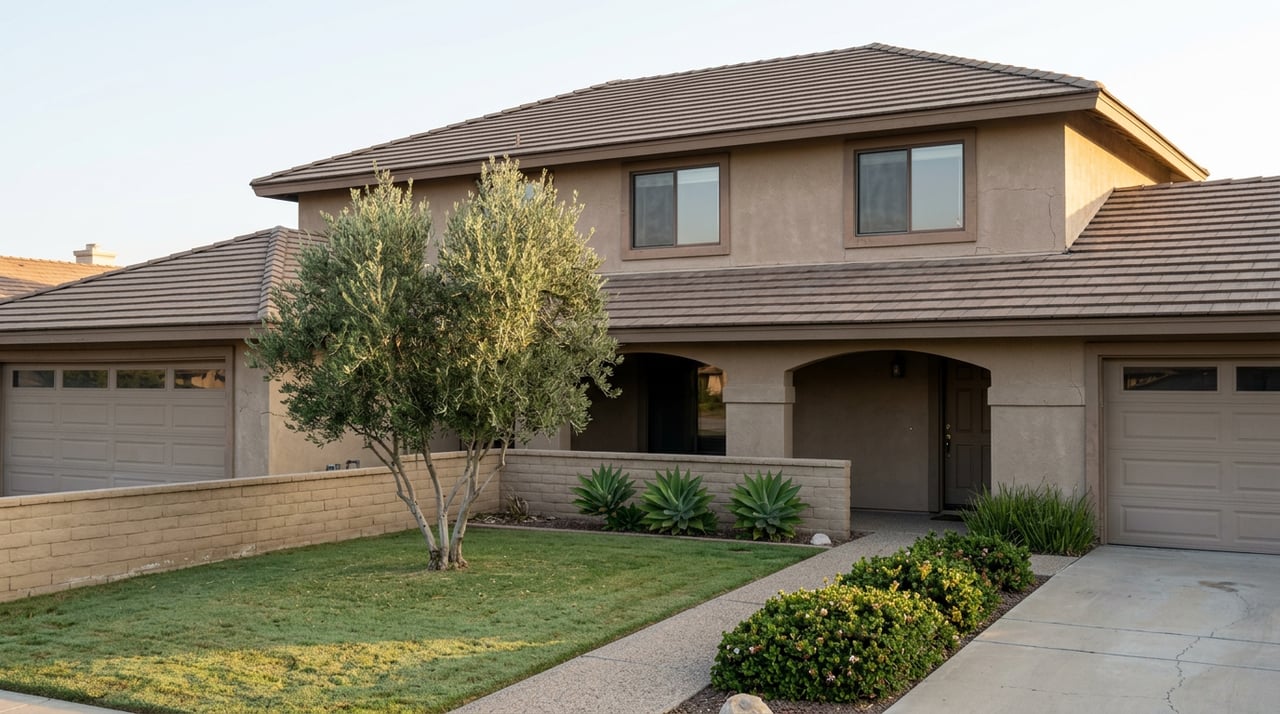
Pull up listings in the blocks around Norwalk City Hall right now and you will notice something that does not match the construction fencing wrapped around the property next door. Homes in this stretch, the neighborhood Redfin tracks as Civic Center, have recently sold for an average of $665,000, down 3.1 percent from a year earlier. Citywide in Norwalk, the average house price over that same window ran $728,000, down a smaller 3.0 percent. That is a gap of roughly $63,000, or about 9 percent, between the neighborhood absorbing the single biggest private investment in Norwalk's recent history and the rest of the city around it.
If you are comparing Norwalk to Downey, Whittier, or South Gate right now, that gap is the number worth sitting with. It is not a red flag. It is what happens when a real estate market prices the last twelve months of closed sales while construction crews are already seven months into a project that will not open until 2027 or 2028.
A comparable sales approach, the method every appraisal and every automated valuation model leans on, looks backward by design. It takes the homes that sold near yours in the recent past and uses them to estimate what yours is worth today. That approach works well when a neighborhood is stable. It works less well when a neighborhood is two years from becoming a different kind of place to live, because there is no comp yet for "house near a finished plaza with restaurants and a transit connection." The comp that exists is "house near a parking lot and a lawn," because that is what has been there and that is what has been selling.
Here is how the two numbers line up right now.
| Metric | Norwalk citywide | Civic Center neighborhood |
|---|---|---|
| Average recent sale price | $728,000 | $665,000 |
| Redfin Compete Score | 81 out of 100 | 71 out of 100 |
| Typical days to sell | 34 days | 35 days |
Both areas carry Redfin's "very competitive" label, and the pace of sales is nearly identical. The daylight is in price, and price is exactly the metric that lags when a neighborhood's future looks different from its recent past.
The project responsible for that mismatch is called The Walk, and it broke ground on Saturday, February 7, 2026, at 12700 Norwalk Boulevard, directly beside Norwalk City Hall. The city's own project page and a formal filing tied to the developer's financing lay out the specifics:
The site also sits at a genuinely high-traffic intersection. Primestor's own property materials cite more than 96,000 vehicles a day passing through Imperial Highway and Norwalk Boulevard, with over 188,000 vehicles a day on the nearby I-5.
One detail worth knowing if you have family history in the area: the existing memorials on the site, including the Veterans Garden, the Patriots Concourse, and the Freedom Memorial, are being preserved and will be reintegrated into the finished project rather than removed.
It is worth knowing how this plan evolved, because it tells you something about how committed the city is to seeing it through. The original proposal, approved in 2022, called for 350 homes and 110,000 square feet of commercial space. When the Norwalk City Council revisited the agreement, the revised plan that emerged put more emphasis on housing, not less: 374 homes instead of 350, including the 56 affordable units, with commercial space trimmed slightly to just over 94,000 square feet and parking reduced from more than 1,700 stalls to 1,542.
That is not the profile of a project getting quietly downsized. It is the profile of a city and a developer deciding, after years of planning, to put more residential density on the site than they originally proposed. Mayor Jennifer Perez framed the reasoning behind the project this way at the February groundbreaking:
For many years, residents have shared that in addition to existing local dining and shopping, there is a need in Norwalk for more options and a central place to gather as part of everyday community life. The Walk reflects that input by bringing dining, shopping, and entertainment together in one walkable public space. Inspired in part by the peacocks at nearby Paddison Farm, the community-led design celebrates Norwalk's character while supporting local businesses and community connection.
The Walk is the largest single project in Norwalk right now, but it is not happening in a vacuum. The city has approved 61 townhomes at 12722 Woods Avenue, on a site that currently holds a church and a school. Separately, a 90-unit affordable housing development is moving forward at 11606 Firestone Boulevard, built by Abbey Road. Norwalk is also home to a Los Angeles County care community currently under construction, combining supportive housing, temporary housing, and treatment facilities.
None of those projects individually moves a citywide average. Together, they describe a city where public and private investment is landing in specific pockets faster than home prices in those pockets are adjusting.
If you are weighing Norwalk against Downey or Whittier, or weighing one Norwalk neighborhood against another, the Civic Center discount is not a signal to avoid the area. It is a signal that the area's price has not yet absorbed information the rest of the market already has: a plaza, sit-down restaurants, and a walkable civic core are arriving within a specific and fairly short timeframe.
That does not mean the discount closes on a schedule, and it does not mean every home within walking distance of City Hall will move in lockstep once The Walk opens. Construction disruption, parking changes during the roughly 24-month build cycle, and normal market cycles will all shape how quickly buyers price in the change. What the current numbers tell you is narrower and more useful than a prediction: right now, buying near a project of this scale costs less than buying in Norwalk generally, and that specific condition has a shelf life tied to a construction calendar the city has already published.
When is The Walk supposed to open? The City of Norwalk's own project page states construction is underway with an expected finish in winter 2027-28. Some press coverage of the groundbreaking cited a slightly earlier late 2027 target, so treat the finish as sometime in that window rather than a fixed date.
Is the price gap specific to Civic Center, or does it apply to all of Norwalk? The $63,000 average price gap described here compares the Redfin-tracked Civic Center neighborhood specifically to Norwalk's citywide average. Other Norwalk neighborhoods were not part of this comparison and may behave differently.
Will the existing veterans memorials on the site be removed? No. According to the city's own materials, the Veterans Garden, Patriots Concourse, Freedom Memorial, and other existing public art on the site are being preserved and will be reintegrated into the finished project.
If you are trying to figure out where in Southeast Los Angeles your budget goes furthest right now, and how a project like this should factor into your timing as a buyer or a seller, that is exactly the kind of read Celeste Castillo does block by block. Reach out and get a clear picture of what your specific street is worth today, not just what the citywide number suggests.
Stay up to date on the latest real estate trends.


Backed by years of success and experience, I’m here to deliver results that exceed your expectations. Contact Celeste today to navigate the journey of buying or selling with confidence.