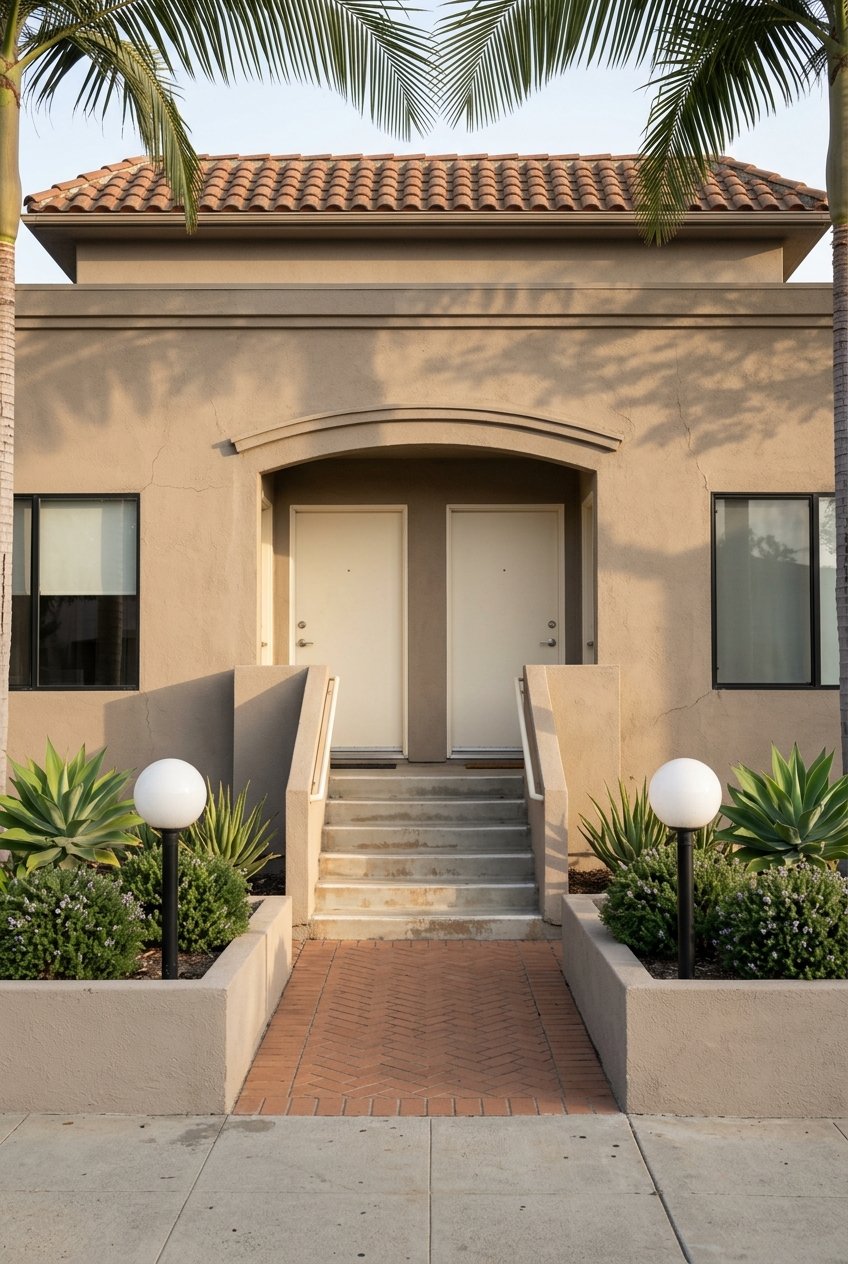
Mid City LA Duplex Investing Strategies & Insights
April 2, 2026
April 2, 2026
Thinking about buying a duplex or small multi-unit in Mid-City? It can be a smart way to build income in a central Los Angeles location, but it is not as simple as comparing rents and mortgage payments. In this market, zoning, rent rules, financing options, and long-term exit costs can all change the numbers quickly. If you want to invest with more confidence, it helps to understand the local rules before you write an offer. Let’s dive in.
Mid-City stands out because it sits in a renter-heavy part of central Los Angeles with steady housing demand. According to USC’s Koreatown-Mid-City submarket report, the area includes a large renter population, while RentCafe’s Mid-City neighborhood data reports that 74% of households are renter-occupied. Even though data sources do not always use the exact same neighborhood boundaries, the broader trend points to durable rental demand.
That said, you should treat neighborhood-wide rent and population figures as directional, not property-specific. USC reported average rent per unit of $1,820 for households that had stayed in the same home for more than a year in its Koreatown-Mid-City submarket, while RentCafe currently shows an average rent of $2,641 in Mid-City. Those differences are a reminder to underwrite the actual parcel and unit mix, not just the headline stats.
Mid-City does not operate in a vacuum. Northmarq’s Q4 2025 Los Angeles multifamily report put market vacancy at 4.6%, average asking rent at $2,513 per month, and the average multifamily cap rate at 5.6%. For you as a buyer, that suggests the broader market is still relatively tight, but returns may depend more on disciplined underwriting than aggressive rent growth.
That matters even more because Northmarq also reported asking rents were down 0.3% year over year in 2025 and forecast a slight decline again in 2026, with vacancy expected to rise to 4.8%. In plain terms, you should not assume future rent growth will fix a weak deal. Older properties, deferred maintenance, and below-market rents deserve extra caution.
One of the first steps for any Mid-City duplex or small multi-unit is a ZIMAS property lookup through Los Angeles City Planning. ZIMAS can help you review zoning, land use, permit history, and overlays tied to a specific parcel. It is also the city’s recommended tool for spotting issues like historic overlays, specific plans, or other restrictions that may affect your plans.
This step matters because development rights can vary from one block to the next. The city’s land use table lists R2 as “Multiple Family Residential (Duplex),” while RD1.5, RD2, RD3, RD4, R3, and R4 also allow multifamily residential use. If you are hoping to add units, reconfigure a site, or evaluate future upside, the exact zoning designation is a big part of the story.
Two properties that look similar on the surface may offer very different opportunities. One may allow only a duplex, while another may have broader multifamily potential, subject to site conditions and city rules. That is why a quick online listing description is never enough for serious underwriting.
Los Angeles is also moving toward more neighborhood-scale housing options. The city’s Missing Middle LA initiative says it is working to streamline review and remove barriers for duplexes, ADUs, small-lot homes, and other smaller formats. That does not change current parcel rules today, but it is a useful signal that policy may continue to support smaller multifamily housing types over time.
In Los Angeles, rent rules are one of the biggest factors in valuing an older duplex or small apartment building. The city’s Rent Stabilization Ordinance overview says the RSO generally applies to rental units built on or before October 1, 1978. LAHD also notes that owners can check RSO status in ZIMAS, and covered properties must be registered annually.
For underwriting, this is not a minor detail. LAHD’s renter protections page states that the allowable annual rent increase for current RSO units is 3% from July 1, 2025 through June 30, 2026. The city also updated the future formula effective February 2, 2026 so increases are based on 90% of average CPI, with a floor of 1% and a ceiling of 4%, and no utility add-on.
If a property is RSO-covered, your future income growth may be more limited than you expect. You also need to factor in registration requirements, notice rules, and the practical challenges of managing regulated units. For many investors, the appeal of an older Mid-City duplex is location, but the operations side still needs careful review.
Even if a unit is not covered by the RSO, you may still face local and state limits. LAHD explains that units outside the RSO are often still covered by the city’s Just Cause Ordinance, and eviction notices for JCO and RSO properties must be filed with the department within three business days of service.
State law AB 1482 also plays a role. The city notes that it caps annual rent increases at 5% plus local CPI, or 10%, whichever is lower, with some exceptions. One city-page exception specifically notes that a two-unit property can be exempt if the second unit was occupied by the owner for the entire tenancy.
When you evaluate a Mid-City income property, do not stop at the rent roll. You also want to know:
These details can materially affect both cash flow and flexibility.
Your loan options depend a lot on whether you plan to live in one of the units. For owner-occupied 2-4 unit properties, HUD says FHA financing can be used on 2-4-unit homes, with a minimum required investment of 3.5% in most cases. That can make house-hacking more accessible if you want to start small and offset your housing costs with rental income.
Conventional financing may also work. Fannie Mae’s 2023 white paper on 2-4-unit housing noted that conforming principal-residence loans for 2-4 units were expanded to 95% loan-to-value on and after November 18, 2023. In some cases, that means you may be able to buy an owner-occupied triplex or fourplex with as little as 5% down, though the CFPB notes that conventional loans with less than 20% down typically require PMI.
If the property will be fully rented or non-owner-occupied, financing often shifts away from standard consumer mortgage products. The CFPB explains that credit used to acquire, improve, or maintain non-owner-occupied rental property is considered business-purpose credit. That is one reason portfolio loans, DSCR-style products, commercial lending, and small-balance multifamily loans are common for investors.
For larger small-apartment deals, Freddie Mac’s Optigo Small Balance Loan program offers another possible path, including fixed or floating-rate options, 5-, 7-, and 10-year terms, 30-year amortization, non-recourse execution, and up to 80% LTV. It is not the right fit for every duplex, but it can become relevant as you scale.
Loan limits can affect whether a purchase stays within agency-backed financing or moves into jumbo territory. According to the FHFA’s 2026 conforming loan limits, Los Angeles County limits are:
For some Mid-City duplexes, triplexes, and fourplexes, those limits may leave room to use conforming financing if you qualify. That can be a meaningful advantage compared with more expensive financing options.
A good Mid-City investment is not just about buying in a central location. It is about buying with realistic assumptions. With Los Angeles rents softening slightly and vacancy expected to inch up, your margin for error may be smaller than it looks on a spreadsheet.
A more conservative underwriting approach often means you should stress-test the deal for:
If a deal only works with aggressive rent bumps or unusually low expenses, it may not be as strong as it first appears. In this market, stable income, manageable expenses, and enough reserves can matter more than chasing the highest projected return.
Many buyers focus heavily on acquisition and operations but spend too little time on the exit. In Los Angeles, that can be costly. The city’s Measure ULA transfer tax FAQ explains that for transactions closing after June 30, 2025, the thresholds are $5.3 million and $10.6 million, with a 4% tax above $5.3 million and a 5.5% tax at $10.6 million or more, on top of the city’s base transfer tax.
For many small Mid-City duplexes, this may not apply right away. But if you are thinking long term, planning to scale, or holding a property with significant appreciation potential, transfer taxes should still be part of your bigger-picture strategy.
The best way to think about a Mid-City duplex or small multi-unit is not as a simple rent check. It is an income property in a layered Los Angeles regulatory environment. Zoning, RSO status, just-cause rules, financing structure, and exit costs all deserve attention before you commit.
If you want help evaluating a duplex, small multi-unit, or income-producing property with a careful, detail-focused approach, Celeste Castillo can help you assess the opportunity, understand the property’s market position, and move forward with more clarity.
Stay up to date on the latest real estate trends.
Backed by years of success and experience, I’m here to deliver results that exceed your expectations. Contact Celeste today to navigate the journey of buying or selling with confidence.